
 Founded in 1986
 Locally Owned
 Jeweler-led guidance

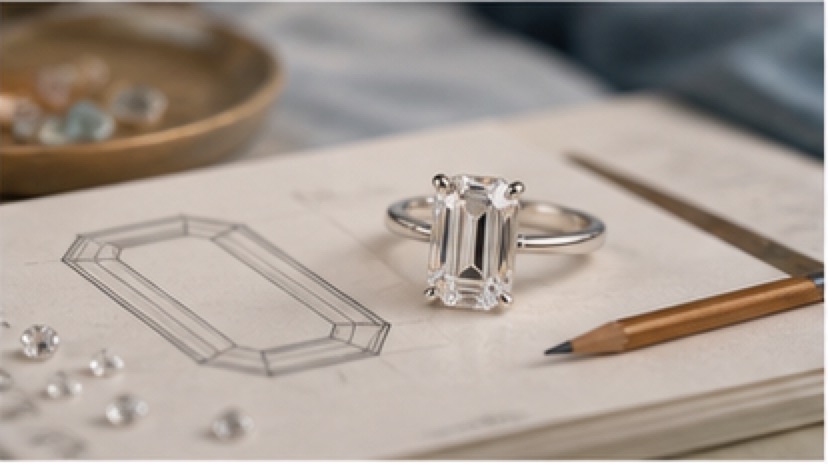
Emerald cut engagement rings have long lines, clipped corners, and step-cut reflections. They can look calm and architectural, but they should be compared differently from brilliant cuts because clarity, proportion, and setting simplicity often matter more visibly.
Quick answer: emerald cut engagement rings
An emerald cut engagement ring features a rectangular or square step-cut center stone with clipped corners and mirror-like reflections. It usually feels clean, elegant, and architectural rather than sparkly in the same way as a brilliant cut.
A useful guide to emerald cut engagement ring should do more than define jewelry terms. It should help you see which choices affect the finished ring, which details are mainly personal preference, and which questions deserve jeweler review before you commit.
That matters because engagement ring shopping can feel precise and emotional at the same time. A diamond report, saved photo, metal preference, family stone, or timing concern may each be useful, but none of them tells the whole story by itself.
Who this guide is for
This guide is for shoppers who like quiet structure more than busy sparkle. It is also for anyone drawn to emerald cuts in photos but unsure why some look crisp and elegant while others show distracting details.
It is also for the person who has already done some searching and feels less certain than when they started. More examples can help, but they can also blur together unless you know what you are comparing.
Use the guide as a planning worksheet. Mark the parts that fit, cross out what does not, and bring the remaining questions into the design plan so the jeweler can respond to your actual situation.
The first decisions to sort
Start by deciding whether you like the emerald cut's calm reflection pattern. It does not behave like an oval or round brilliant. The beauty is often in the long flashes, open table, and clean geometry.
You do not have to settle every decision before asking for help. In fact, the best first step is often to name the decisions you are unsure about so the consultation does not start with assumptions.
These are the details worth writing down before you compare rings, stones, or settings:
- Length-to-width feel: long rectangle, balanced rectangle, or square Asscher-like direction.
- Clarity visibility through the broad, open facets.
- Simple setting versus side stones or decorative detail.
- Metal color and how it changes the mood.
- Band fit and setting height.
What to pay attention to
Emerald cuts make some details easier to see. The same openness that creates the elegant look can also make inclusions, body color, and proportion choices more noticeable.
Try to separate the look you like from the practical reason it works. A ring can look beautiful in a photo and still raise questions about height, care, wedding band fit, stone security, documentation, or how the wearer uses their hands.
When you notice that difference, you are no longer just browsing. You are building a better question for the jeweler.
- Visible inclusions under normal viewing.
- Straight, balanced step reflections.
- Proportion and corner shape.
- How the setting protects clipped corners.
- Whether the ring feels too severe or just clean enough.
The tradeoffs behind the choice
The emerald cut tradeoff is less about maximum sparkle and more about clarity, proportion, and restraint. A simple setting may let the shape breathe, while side stones or a halo can change the whole tone.
This is where a calm comparison helps. Instead of asking which option is best in general, ask which option best fits the wearer, the stone path, the setting, the budget comfort, and the way the ring will be worn.
Ask to compare emerald cuts for the type of reflection you like. The right answer is not only a grade; it is the stone that looks right in the setting you are planning.
What to put in the design plan
The Diamond Shoal design plan works best when you share observations instead of trying to sound technical. A saved photo, a note about what the wearer usually chooses, or a question about a stone is more useful than a paragraph full of borrowed jewelry terms.
In the design plan, describe the mood you want: Art Deco, minimalist, classic, architectural, warm yellow gold, bright white metal, or a softer side-stone design.
If a detail involves pricing, timing, policy, documentation, stone condition, appraisal use, inventory, or final production, treat it as a question for jeweler review rather than a promise. That keeps the process clear and protects the decision.
- Emerald cut proportion you like.
- Simple solitaire, three-stone, bezel, or side-stone direction.
- Metal color preference.
- Tolerance for visible inclusions or need for review.
- Whether you want the ring to feel vintage-inspired or modern.
Common mistakes to avoid
The common mistake is judging an emerald cut with the same expectations as a round brilliant. It will not flash the same way, and that is the point.
Most mistakes come from locking onto one visible detail too early. The center stone matters, but the ring also has to work as a piece of jewelry that is worn, cleaned, insured, paired with a band, and looked at every day.
Before you decide, slow the choice down enough to check the following points:
- Expecting brilliant-cut sparkle from a step cut.
- Ignoring clarity visibility.
- Choosing a setting that fights the clean outline.
- Forgetting to check the corners and prong placement.
- Comparing only by carat weight rather than face-up look and proportion.
When a jeweler should review the details
A jeweler should review emerald cuts for clarity visibility, proportion, and setting compatibility. Small differences can change whether the stone feels crisp, glassy, heavy, or elegant.
A jeweler review is especially important when a choice affects stone selection, setting structure, documentation, durability, repairability, future band fit, or how a family piece may be used. Those details are hard to judge from a single photo.
That review is not meant to take the joy out of the decision. It is meant to help you understand what you are choosing before the ring becomes a real project.
How this connects to a custom ring
Custom design can make an emerald cut feel deliberate instead of plain. The jeweler can tune the setting proportions, band width, metal color, side detail, and height around the stone's geometry.
Custom design works best when it starts with a real person and a clear set of priorities. The design does not need to be unusual to be custom. It may simply need the right proportions, stone path, metal direction, setting height, or family detail.
If you are still unsure, the most useful next step is to send the design plan with the best information you have now. A Diamond Shoal jeweler can use that context to guide the next conversation.
A one-minute checklist before you choose
Before you treat the decision as final, pause long enough to check whether the ring still makes sense outside the perfect photo. Think about the hand that will wear it, the days it needs to get through, and the questions that would bother you later if they were never asked.
This quick check is not meant to slow the project down. It is meant to keep the most important details visible while the excitement is high. If one answer is not clear yet, that is a useful note for the jeweler rather than a reason to stop.
Use the checklist as a final sweep before your design plan or consultation. The right answer should feel understandable, not rushed.
- The choice fits the wearer's everyday style, not only a saved image.
- The stone, setting, and metal have been considered together.
- Daily wear, profile height, care, and future band fit have been discussed.
- Documentation, policy, timing, and pricing questions are marked for jeweler review.
- The next step is clear enough to move forward without pretending every detail is final.
Useful sources and next reading
Use outside education for background, then confirm your ring-specific questions with a jeweler. Public education can explain terms, but it cannot confirm the right stone, setting, price, timing, policy, or production path for your project.
- GIA engagement ring tipsBackground for style, setting, and stone questions.
- Diamond Shoal engagement ring settings guideInternal guide to ring structure and daily wear.
- Diamond Shoal engagement ring shapes guideInternal guide to shape and visual direction.
- Start the Diamond Shoal design planShare style clues and questions for review.
Common questions
Do emerald cut diamonds sparkle less?
They sparkle differently. Emerald cuts have step-cut, mirror-like reflections rather than the same brilliant sparkle many people expect from round or oval diamonds.
Is clarity more important for emerald cuts?
Clarity can be more visible because emerald cuts have broad, open facets. The specific stone should be reviewed for whether any inclusion distracts from the look.
What setting works well for an emerald cut engagement ring?
Simple solitaires, three-stone settings, bezels, and clean side-stone designs can all work. The right choice depends on proportion, protection, metal color, and the wearer's style.
Do I need to know every jewelry term before starting?
No. It is enough to share the wearer, saved inspiration, stone questions, budget comfort, timing notes, and what you want to avoid. A jeweler can translate those details into practical ring choices.
Is the design plan a final order?
No. The design plan is a planning step. Final design, pricing, timing, policy, documentation, and production details should be confirmed through jeweler review before any commitment.